A First Florida Winter
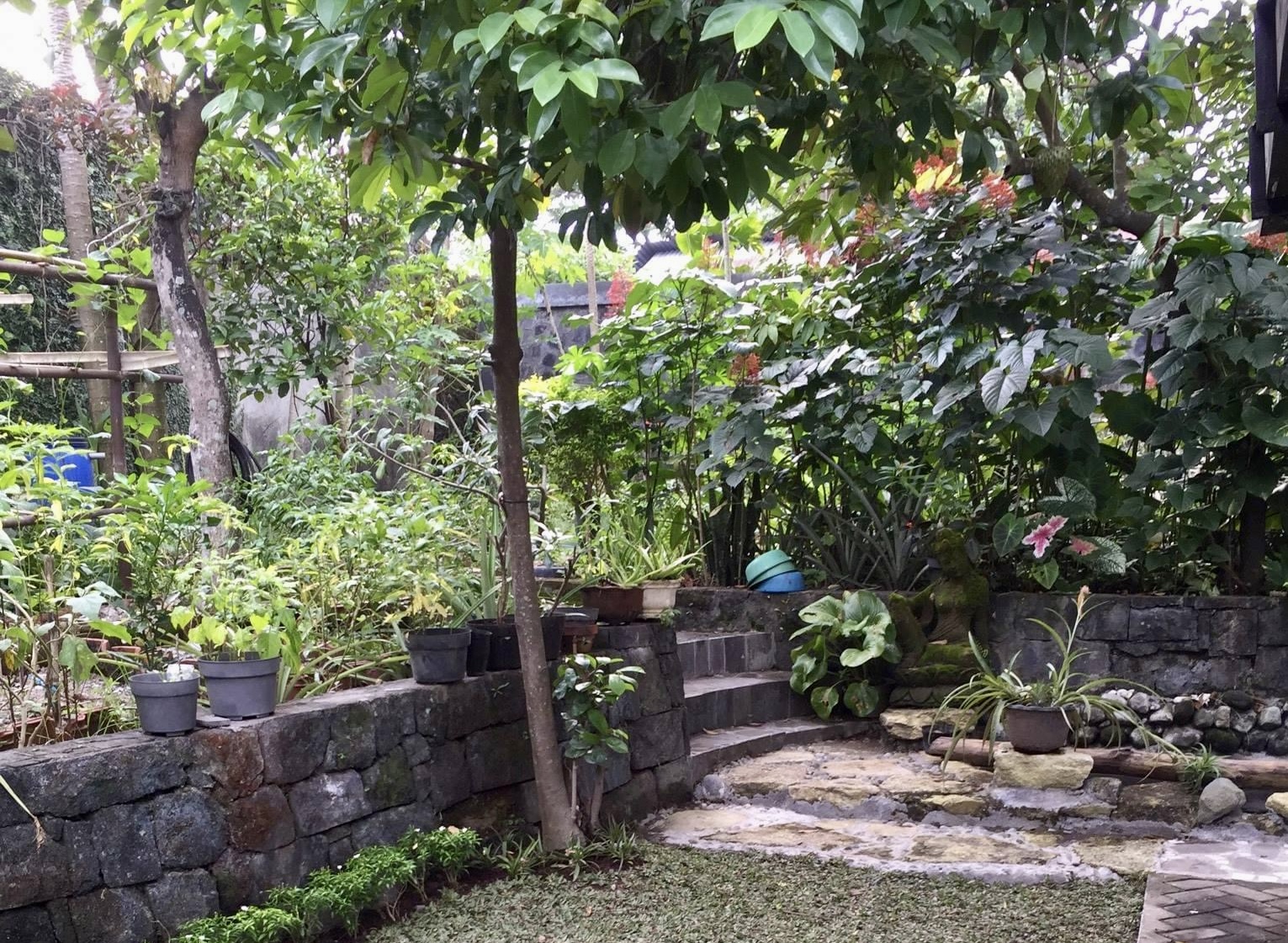
The Garden Club ladies mainly grew their gardens for pollinators, especially monarch butterflies, creating gorgeous, manicured flower beds often with a focus on native plants. My goal was different. I wanted to grow food with the crazy idea of creating a food forest. I could do this. I had one in Indonesia. Did I create it or have anything to do with its success as a food provider? Heck no! It happened. My husband and I bought several fruit trees shortly after moving into the house (we purchased in 2006 after a big earthquake caused a huge drop in home prices) and threw seeds from all our favorite store bought fruits haphazardly into the yard – along with kitchen and garden waste. Everything grew with no effort from us. In time, our garden grew from a barren wasteland when we first moved there into a jungle – and a very productive food forest.
My experience, or lack thereof, in Indonesia would only make my Florida gardening life more difficult. It instilled a confidence in gardening based on absolutely nothing. But I did have persistence, a lack of a social life (I only knew a handful of people, mainly relics from my 1970s history as a skydiver too here in Deland), and a shear determination going for me in Florida – and, of course, the Garden Club. From the very beginning, my lack of experience, tiny budget, or availability of expert hired help was obvious in the multiple mistakes made. But I did/do attend lots of garden club and online training sessions and retain at least some of their know-how. In all honesty, my successes are due mainly to my calm acceptance of failure and my refusal to give up. What else did I have to do with all my free time?
The decision to keep the dreamed of food forest in the back yard was based on my wanting to hide failures as well as the chaos and seasonal changes required in food production. Plus, I wanted to protect the overall (hopefully soon to be achieved) aesthetic appeal of my front yard. The north facing front yard needed to look pretty since it was visible, unlike my south facing, private backyard. I wanted the garden club ladies to gush over my perfect garden too as they do over other members’ gardens during our frequent garden club home visits. We will just overlook the fact that these women had way more gardening experience than I did, were at it for way longer, were growing perennial flowers, not seasonal food, and they had support in partners, higher budgets, and often enough, hired help.
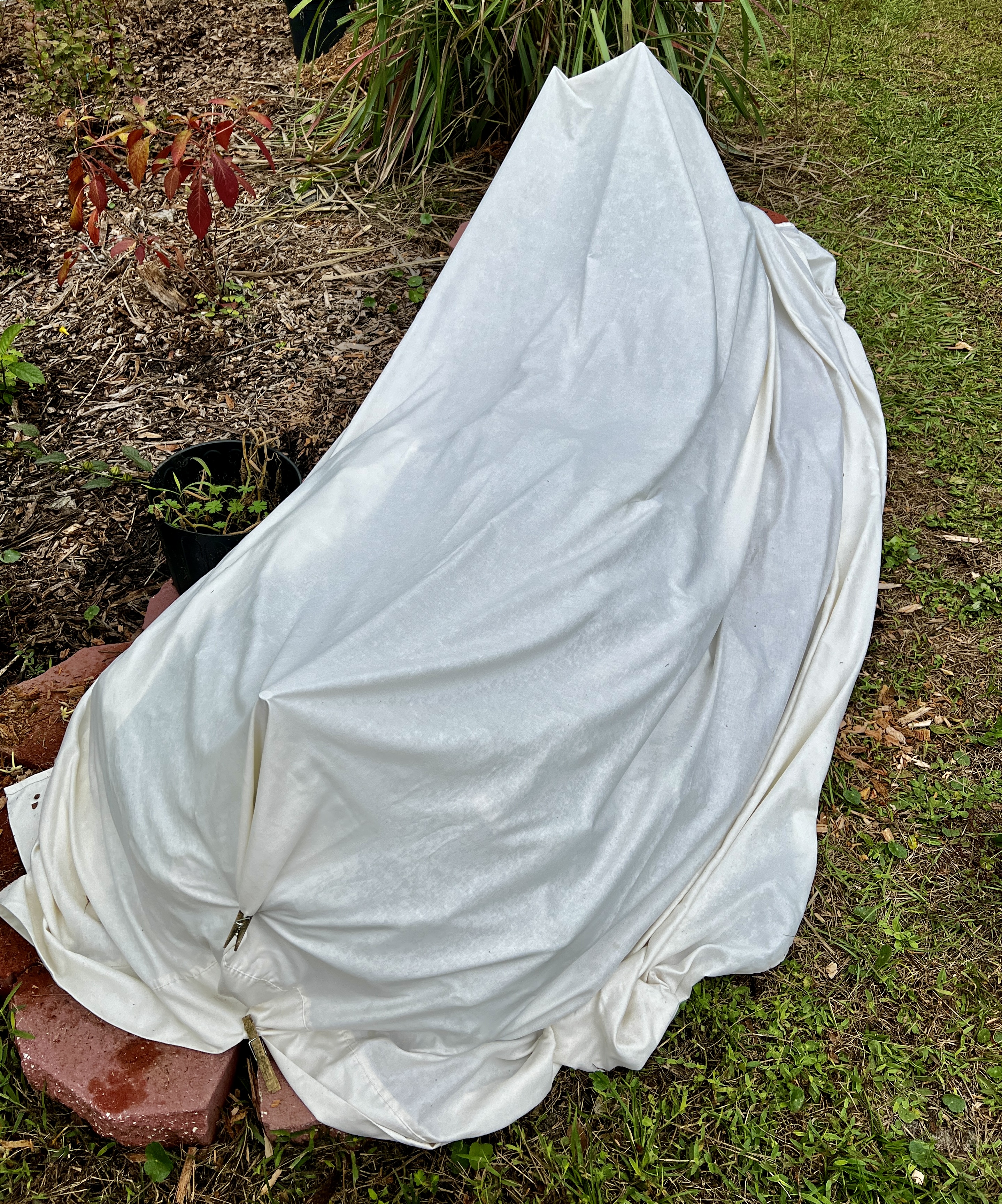
Six months after moving into my new house, I faced my first major learning-to-garden challenge. That first winter I had to rush out and buy all the sheets I could find at thrift shops to cover my tropical trees that were now exposed to cold north winds in my front yard. A day ahead of the frost I was out covering everything with sheets attached firmly to the ground by bricks borrowed from the raised beds. Having attended Garden Club lectures on winterizing our gardens, I knew that the ground needed to be well saturated and the plant covered from the top down to the ground so that the heat retained in the ground would keep the plants safe. It is not just the leaves that need to be covered – as I saw lots of people around the neighborhood had done. Clearly they were not Garden Club members. My plants would be safe as long as the frost didn’t last too long. This one was forecast to last for three days.
There was also talk on the radio about protecting pipes from freezing. Seriously?? That was not something I had ever thought about before since living in a hot, tropical climate on the equator for forty years. Volcanic eruptions and earthquakes were fine. They occur suddenly, often with no warning. I knew exactly what to do through my occasional jobs as disaster risk reduction trainer and having survived quite a few myself. But freezes and hurricanes were all new experiences I had to worry about. Worry is the optimum word here as warnings, forecasts, preparations, threats, evacuations and nonstop emergency notifications begin days even weeks in advance. The buildup is horrific! I miss my earthquakes with no time to ponder the danger, just quick reaction. Now I needed to learn a whole new set of disaster responses – things I’d never thought about – like freezing pipes. Friends said to leave water running overnight. Another suggested I cover the outdoor pipes in mulch, which was easy enough to do. I had mulch and I had cardboard boxes to build a container around the pipes. I guess I was prepared – over-prepared actually as I did things I’d not needed to do, like fill the bathtub with water. How would I know that even if the power goes out, water still runs?
Since this is Florida, following the three day frost, we were back at 80 degree weather for some time. When the next frost was forecast to hit, it was only going to last for 3 to 6 hours over night. Since my plants did so well during the 3-day frost, a few hours would be nothing. I never bothered to cover anything. Days after the second frost, our winter wonderland returned to the usual sub-tropical paradise. My tropical trees missed that message and slowly began to shrivel up and turn black. I really should have covered them. Papaya, mango, moringa, and guava all grew increasingly dried up and sad looking. Those in the know (again, thank you Garden Club!) all warned not to pull anything out of the ground or even prune back the dead leaves or branches. Anything can come back to life and the seemingly dead parts will protect the possibly not dead parts. Further, local bugs need dead foliage for winter hibernating. Leave everything be until the threat of frost is gone and we are absolutely certain no more cold will hit.
In the end, the mango, moringa, guava and papaya trees all showed signs of life. Once I was sure there’d be no more frosts, I trimmed back the dead bits, composted them all, and fertilized and treated them with love and affection. Only the mango had to be pulled and tossed. The rest seem to have survived and are willing to try again at fruitful life. But I’m not sure I have. That first winter taught me a valuable lesson – do not grow things that can’t handle the weather!
That first winter, I discovered it was possible to buy wooden raised garden bed frames from a garden shop in the Midwest at significantly discounted rates. I ordered three cedar 4×2 foot beds for a little over $100 (usually 4 times that price!) that were promptly shipped to Florida. This serendipitous discount find is what spurred my starting to cultivate the backyard. Once I had the beds out of their boxes, I needed time to assemble them. The privacy of the backyard solved concerns about theft, and not needing to be visible while I figure out what the heck I was doing. I assembled them, placed them in an H shape (without leaving enough space for me to maneuver around them) and commenced to fill them. I’d learned from the Garden Club ladies that I needed to line the bottom with cardboard to prevent the grass and weeds from coming through. Delivery boxes all saved and I could get more cardboard from neighbors’ recycling bins on Tuesdays. And on Thursdays, garden waste was picked up. People actually rake their oak leaves and bag them for trash! I naturally picked up bags of these too to add organic matter to my beds. The mushroom compost went over the leaves that would eventually decompose and replenish the nutrients to the soil.
Mulch! Everyone in Florida mulches to retain moisture during the dry and hot spells and to maintain warmth during frosts. They buy it by the plastic bagful in designer colors – not quite what i wanted. A very short-lived romance with a gardener I had met on a dating app (wait – that part of this adventure will come in a later chapter!) had benefits. Trevor’s greatest legacy was turning me on to Chip Drop (and tilling for in-ground planting rather than raised beds). Sign onto their website and when arborists in the area remove and mulch trees, they can drop the fresh load on your property – if it’s convenient for them – instead of taking the tree debris to the dump, where they must pay to drop it. It’s a win-win situation. With my convenient, in-town, corner location, my house was an easy bet for a free Chip Drop! I’ve had four to date. We are not talking a small load. These are massive truckloads that can easily be as high as the house! Within a few days of signing onto getchipdrop, I had my first load!
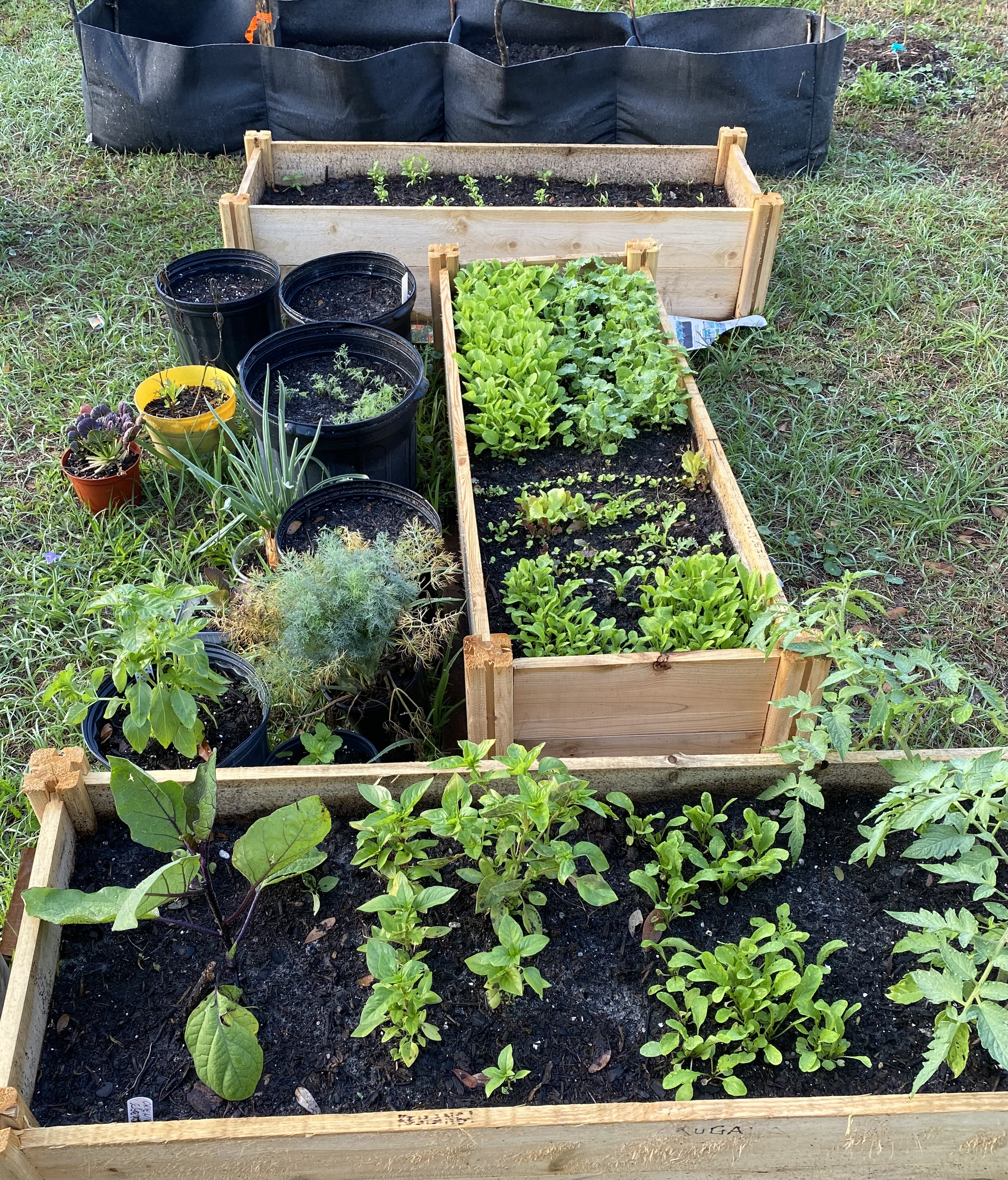
I was set to start preparing my backyard beds. Cardboard in place, dead dried leaves and small twigs and branches over that about half way up the walls of the bed, then numerous trips to my mushroom compost pile to shovel into the wagon, drag it into the yard and load it into the raised beds. Once everything was in place, it was time to plant seeds. Carrots and eggplant went into one bed. Salad greens, arugula, basil into another. In the last one, I planted tomatoes, dill, mint. What did I know about co-planting? Nothing! But I had no problems and everything grew quite nicely. I really can do this!!
Well, almost no problems.
My need for gardening was expanding in all directions. My gym was located in a strip mall next to a Tractor Supply store. I had never been to one so after a workout, I walked over to check it out. Bingo! I bought a large, four compartment cloth raised bed and a wooden barrel cut in half to make a large planter. Both were on sale so I bought them – plus a blueberry and raspberry bush (both of which never grew and I pulled and composted ten months later). I carried them home and set them up, filled them with leaves and kitchen waste, and topped off with compost and mulch. I planted coriander, salad greens, bok choi, sweet potatoes, carrots, and beets in the large felt bed, carrots in the wooden planter, and oregano in a large plastic planter I’d taken out of someone’s trash. Following the first heavy rain, however, I discovered that the wooden planter had no drainage holes and rainwater was accumulating inside. I borrowed a drill from Tracy Sales, my cool, single female, very competent neighbor and proceeded to drill holes into the sides of the barrel. It was the first time I had ever used a drill. Watching the water immediately drain out in cascades was thrilling! I can do this stuff! I did not yet know, however, that drills can drill in clockwise and counterclockwise directions at the flick of a switch. What switch where? Drilling into the barrel was easy but pulling the drill out of the hole required both feet leveled on both sides of the new hole and pulling with all my strength – then flipping backwards (literally ass over tits as descriptively stated in British English) when the drill emerged and getting doused by the dark, muddy flow. Live and learn.
My closest friends here were now gardeners through whom I had so much to learn, to share, to grow. One of my besties, Jean, was a master gardener with a spectacular garden. She was very generous with her knowledge and cuttings, but she was also extremely difficult. This was something new to me – friends who were exceptionally hard work to maintain as friends. I was meeting people here in the US who were very rigid in their opinions and attitudes, with no room for flexibility. This was not what I was used to in my overseas life where for the most part people go out of their way to accommodate and please others. Conflict is avoided at all costs. Personally, having lived and worked most of my life in non-American and non-English speaking societies, I have a very high tolerance for (and admittedly an attraction to) chaos, misunderstanding, difference, weirdness, or just plain things I don’t understand. Difference and confusion are great opportunities to learn something new and conflict is avoided as an unnecessary barrier to the new experience. I have a high tolerance for other people’s rudeness and I try to not take things personally for the simple fact that friendship is an exceptionally highly valued commodity. I am still not so sure I have any mastery over relationship building here, however.
Through Jean (before our falling out over something that to me seemed totally unimportant), as well as FaceBook, where I joined several backyard, food forest, and Florida gardening groups, I was introduced to Lonny Reid and his Reid Family Farm. Lonny was an eccentric (Yes! My kinda buddy!) and very enthusiastic homesteader who ran a nursery nearby in addition to growing and foraging for his family’s food. Aside from being thoroughly inspired by his own rather comfortably chaotic, vast food forest, he holds extremely helpful workshops on various aspects of food forest creation (check him out and book classes here: https://thereidfarm.com/). I attended a workshop he held on soil amendments that finally placed everything I had been thinking and wondering about into a doable practice. Mulch was the answer! If you pile it 10-12 inches thick, it suffocates the grass. As the grass decomposes, it adds nutrients to the sand. The mulch too will decompose and add even more to the sand while also retaining moisture. Eventually all the decomposition adds mushroom-like, spidery white organisms that bring the sand back to life. It really does turn our pale sand into rich dark soil! It works and all the fat, healthy looking earthworms I find now as I dig are proof!

Meanwhile, after covering all my new and old raised beds, I still had a big mound of mulch on my front lawn. The answer of course was to rake it out over the lawn to begin killing it off. Who needs a lawn when I can have a food forest! I bought a rake and began raking what had probably been a three foot high, eight foot wide pile across the front lawn. It wasn’t easy or quick – and it didn’t go far. After starting, of course, I began to realize how not preplanning was creating more work. Firstly, I needed to make sure I could still access the back yard through the side gate. If I’d mulched along the shrub line like I was doing, I’d lose access to that gate. Move all the mulch back toward the street side and along the paved walkway. To keep it over the grass and not spill into the street, I had to go find border material to line the edges. Back to Lowes to buy some 6 inch high, 16 inch long scalloped edging stones ($2.28 each). Sitting on the road with my hand trowel (and gardening gloves), I pushed the mulch away and dug into the sand to secure the stones. That meant the mulch was only four inches high along the edges and for some stupid, aesthetic reason, I wanted it covered evenly throughout. It was nowhere near enough to prevent weed growth. I needed so much more!
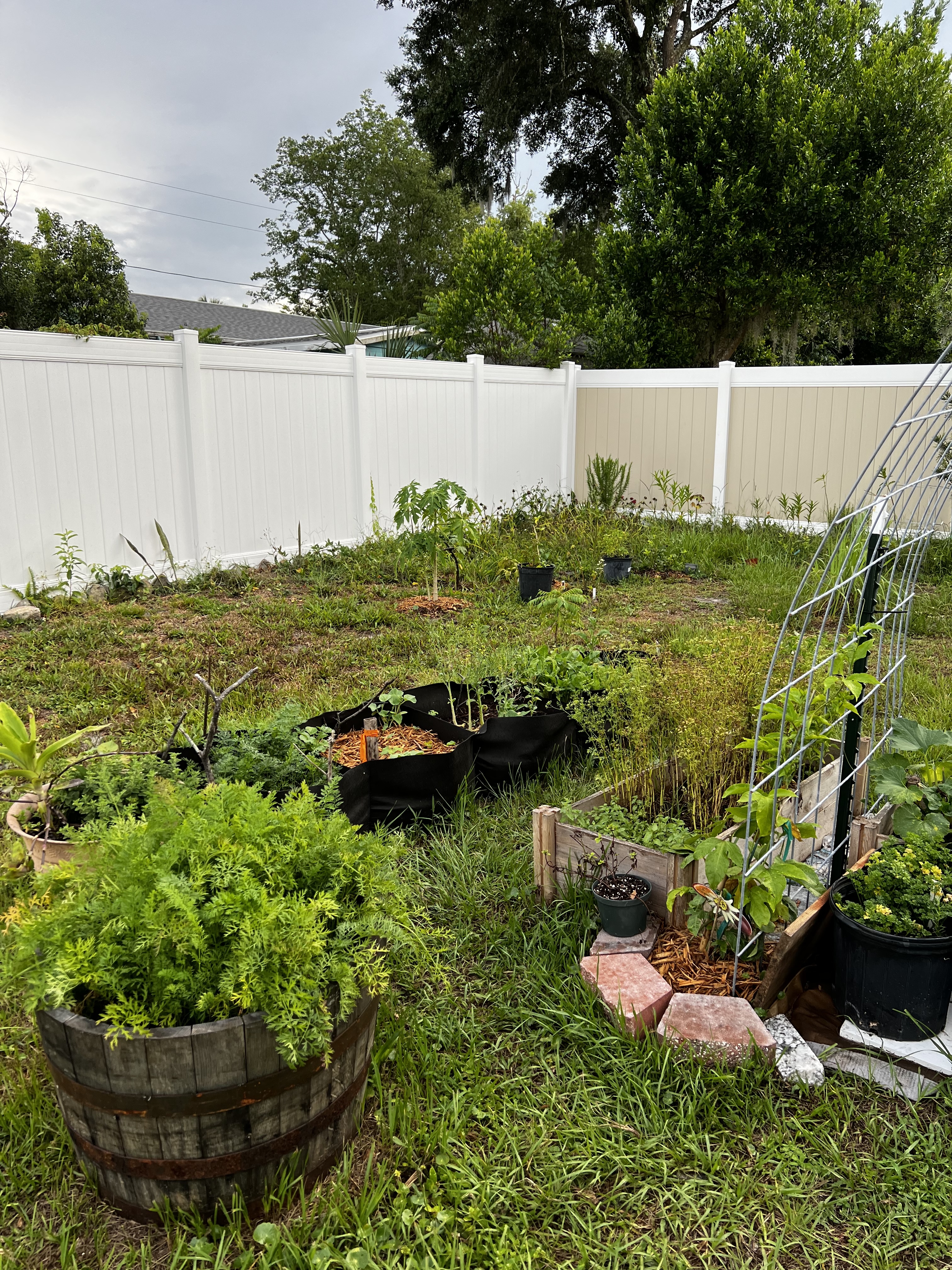
Once that mulch was finished, I requested another Chip Drop. There was a section in the far corner of the back yard that I was naïve enough to let go wild. At first, wild flowers like spider wort and various daisy-like flowers (bidens alba) grew, but mainly really tall grasses took over and looked pretty ugly. Finally, I decided to mow it all down and cover it with thick mulch that I shoveled and hauled to the back – day in and day out. At least the weather was cooler and I could put in several hours of work each day. I’d figure out what to plant later after all that mulch had done its magic. With the remaining monster mound, I covered that same front section of lawn a good ten to twelve inches high and expanded it to cover half of that section of lawn – but not along the edges. Most of the mulch was thick enough now to kill off the grass. Naturally, along the edges the grass soon grew through all that shallow mulch because I did not place cardboard under it like I should have. When a year later I actually did push back the mulch along the paved walkway to the front door, pulled out all the clumps of grass, and placed cardboard over it, the grass found its way through in places anyway. I have not yet bothered to pull the tall grass clumps along the roadway side. It does not look pretty anymore at all.
When I had finished that second mound, I requested another Chip Drop. It was only most of the way through my third ChipDrop that I learned the secret to breaking down the mulch faster. Rather than leaving it in a huge mound as I had been, I need to flatten and spread it out more to increase the amount exposed to the sun and rain, both of which help it to break down. Fresh mulch gives off heat as it decomposes and can hurt or kill plants. Since that was pretty much what I wanted, it was all good to go over all that vast expanse of lawn.
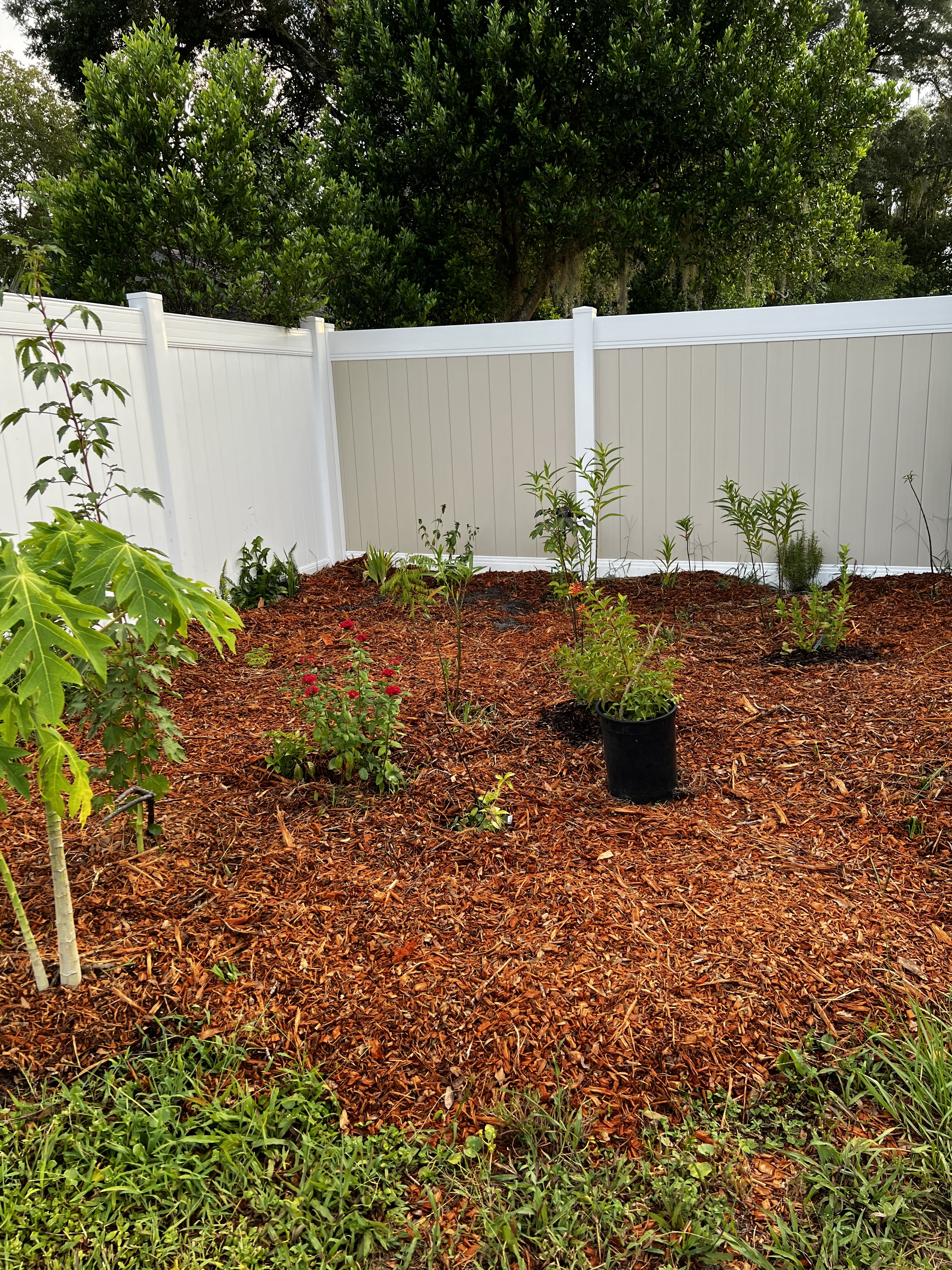
While my raised beds were doing just fine, that back corner was my new area of focus. I still hadn’t learned about preplanning anything, however. The Garden Club has a milkweed sale every year and since everybody raves about native milkweed (as opposed to the non-native varieties sold at Lowes) and raising monarch butterflies, I naively went along and planted ten seedlings in that back corner. I’d also picked up a few blueberry bushes because, why the heck not? Those also went into the ground back there – after adding coffee grounds and pine bark to acidify the soil.
Blueberries prefer acidic soils to thrive. We are supposed to test our soil PH but have I ever done this? You know the answer. I trust my instincts to get me through most problems.
So you’ve probably sussed out by now that I do things impulsively. I’d learned somewhere that Florida summers are way too hot for growing most vegetables and that people use shade cloth to protect plants from the burning sun. While I had a roll of the cloth taken out of a dumpster, putting it up was way beyond my ability to figure out – and too much hard work if not just plain silly according to my gardening philosophy. On one of my FaceBook groups I’d seen someone make a trellis out of cow fence panels and T bars because they are cheap and very durable. This excited me to no end with thoughts of placing a trellis over my beds so that I’d have natural shade cloth in the form of grapes or jasmine or if nothing else, a good way to grow bean vines. The shade provided by the aerial foliage would aid vegetable growth during the heat of the summer.
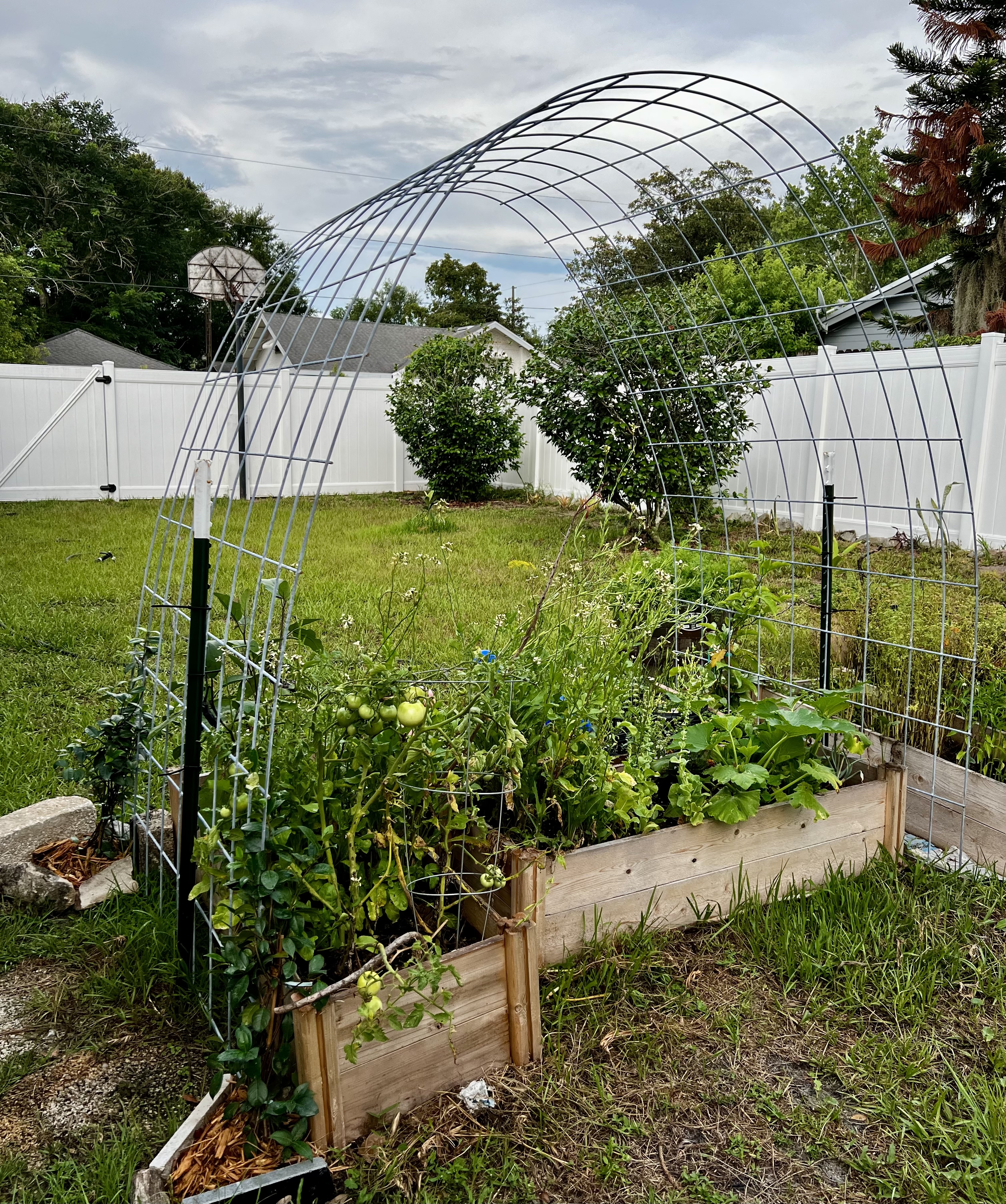
Cow panels were cheaper at Tractor Supply than Lowes. Even better, when I asked if it could be rolled up to fit in the back of my Tesla, the salesperson laughed. I really hadn’t a clue. Delivery would have cost more than the items but when he realized I lived just 5 minutes away, he offered to have it delivered for free that afternoon, as soon as their delivery person returned. There are advantages to being a dumb broad – and we’ll just overlook my usual feminist attitudes and my PhD among other markers of ability I do not need to emphasize here. With a lot of help from Don (yet another great friend introduced through Jean, who has held firmly to her refusal to ever be my friend again regardless of my attempt to bridge that void), we put the trellis up in less than an hour.
Totally contrary to everything I’d read from the FaceBook gardening groups, it did work as a shade. I had bok choi and salad greens all summer long! Rule-breaking in gardening does have benefits!
 Laine Berman