What do I do with all this food?
Farm to fork? Ha! My harvests don’t get that far. Every morning first thing I do while waiting for my tea to brew is walk through the garden and pick string beans, peas, tomatoes, leaves, berries, herbs, whatever I find and eat them., then and there, who cares what gecko or bird or bug relieved themself on it. Heavenly, and one of my favorite things to do when people visit to see the garden. Pick a string bean or herb or pea or everglade tomato and hand it over to eat and watch people get a bit nervous. Yes, you can eat it. But once they take a bite and realize how delicious it is, they always ask for cuttings or advice. Maybe it’s the good food or maybe it’s my bubbling enthusiasm, or just the serenity of being in a well functioning, albeit chaotic, food garden; all of my close friends have taken up gardening for food (with limited and varying results)!
But now my harvests are getting bigger.
The goal, as well as the downside to growing so much food is that I now needed to learn to use it, cook it, preserve it, enjoy it. Salad greens and herbs are easily picked when needed. But what the heck do I do with all this cabbage? What can I do with 40 carrots? What the heck can I do with all this roselle? I had never heard of pigeon peas. Now I had a huge harvest and needed to figure something out pronto (Caribbean pigeon pea stew!).
After I had harvested my first heads of cabbage, I quickly got tired of boiled cabbage. The smell of boiled cabbage (and potatoes) was reminiscent of Lower East Side of New York tenements where Eastern European immigrants mainly settled back in the early 1900s – and up to my experiences running around that area as a teen in the 1960s and 70s. It was pleasant in an Old World kind of way until I had gone out to talk to my neighbor, Rose here in DeLand, and halfway across the front lawn I had not yet mulched over, the scent of boiled cabbage still lingered in the air. Oh heck, no! What else can I do with cabbage? My other homesteader, hippy, gardener friend, Harry Wilson, suggested sauerkraut. Having grown up in New York City, I, of course, remembered mom sending me to the appetizing store (local Jewish deli but without meat, thus different from a deli) to pick up sauerkraut. It was in a large wooden barrel and we’d reach in tippy toes barely on the ground with tongs stretched and pick a huge clump out dripping tangy brine and place it in a plastic container, dip again with a spoon for a bit of that brine, then close it off and carry it to be weighed and priced. Never mind this was 60 years ago. I still recall the fragrant scent of that store and the sawdust that covered the bare wooden floors.
Harry suggested I get a fermentation crock and make my own sauerkraut. It was easy, he promised. I found a 1 gallon crock on Amazon complete with weighing stones (to keep the cabbage submerged) and a wooden pounding stick (to squeeze the natural juices out of the cabbage and get it all into the crock). He was right. It was easy enough. The process used up a full head of cabbage (I add shredded leaves from broccoli or cauliflower or kale when the crock wasn’t full enough) that I shredded, salted, massaged and added spices (caraway seeds of course, garlic – that turns blue when fermented!, a bit of chili), and I added shredded carrots because I had them and I liked the added color. Salting and massaging or pounding the cabbage releases its natural juices which becomes brine as it ferments inside the crock. After one week, I had delicious sauerkraut and a great way to prolong its shelf life.
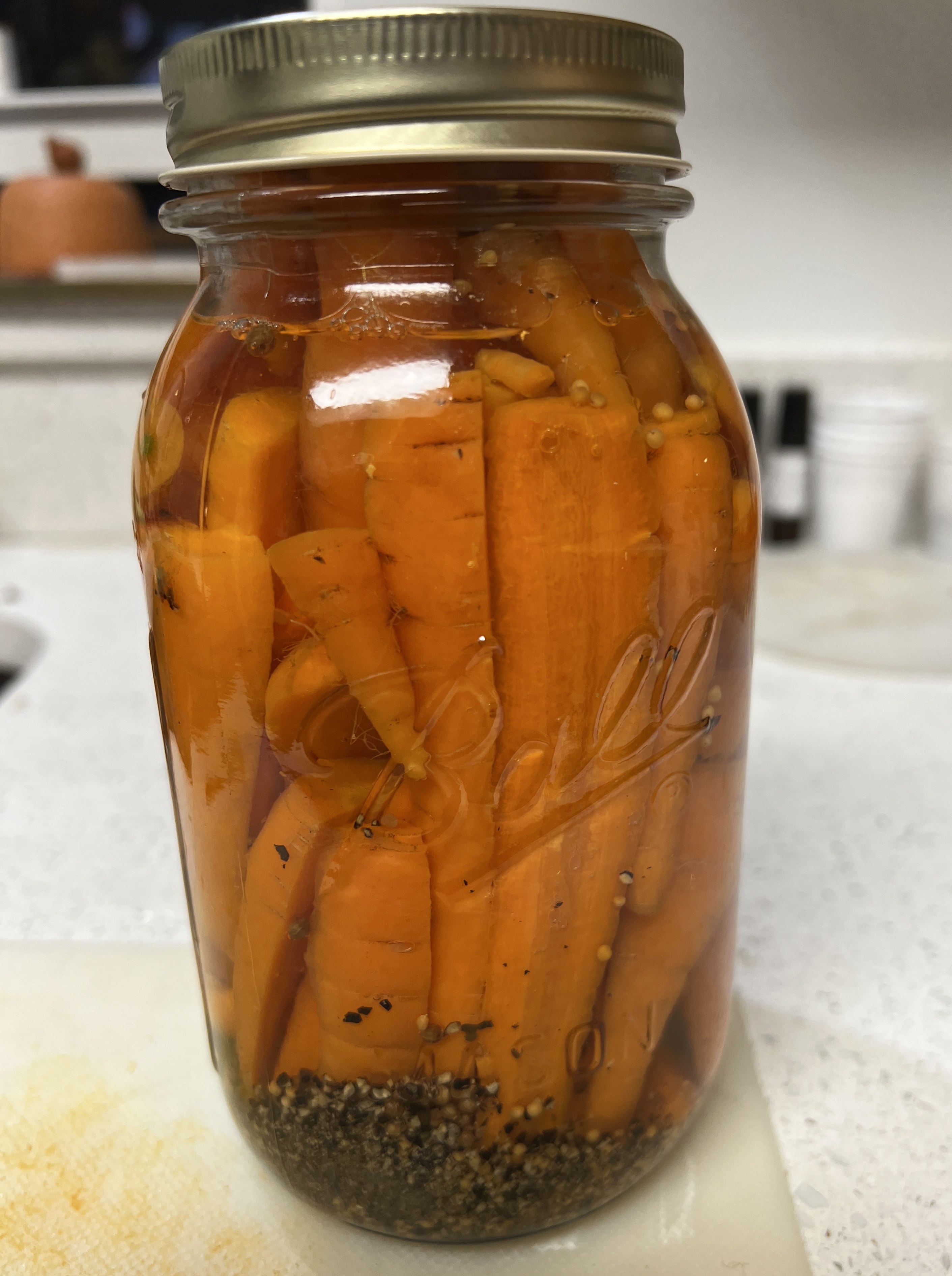
Grating and adding carrots to the cabbage was a great move. But I still had dozens of carrots, lots of beets, and cucumbers as well. It was time to learn pickling. Some friends suggested I learn canning. Others recommended pickling. Canning was way too scientific, involved, and required boiling and handling hot jars. I knew I’d not have the patience or the ability to safely handle all that boiling water and hot jars. Pickling, on the other hand, was simple, quick, and I could be far more creative with recipes.

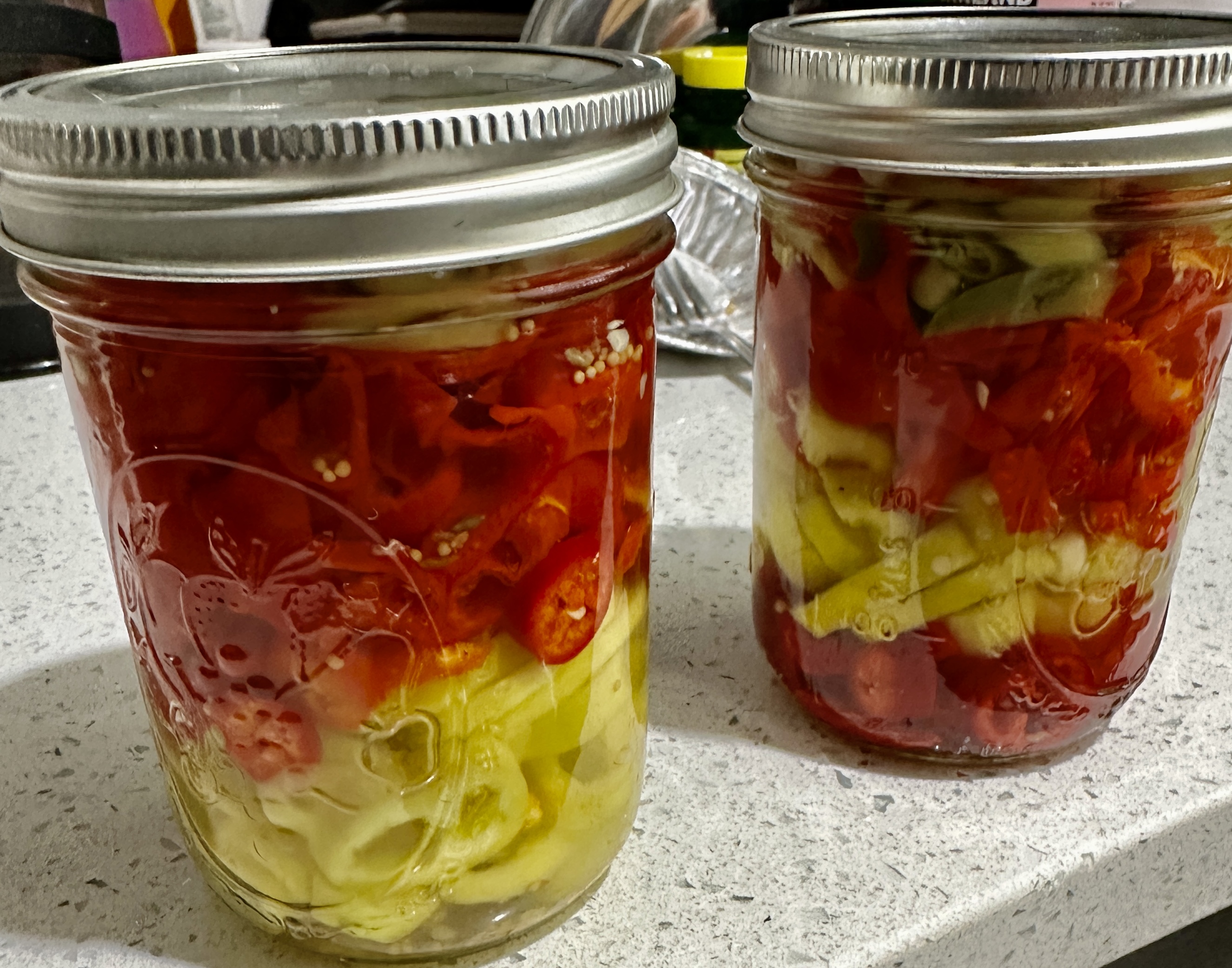
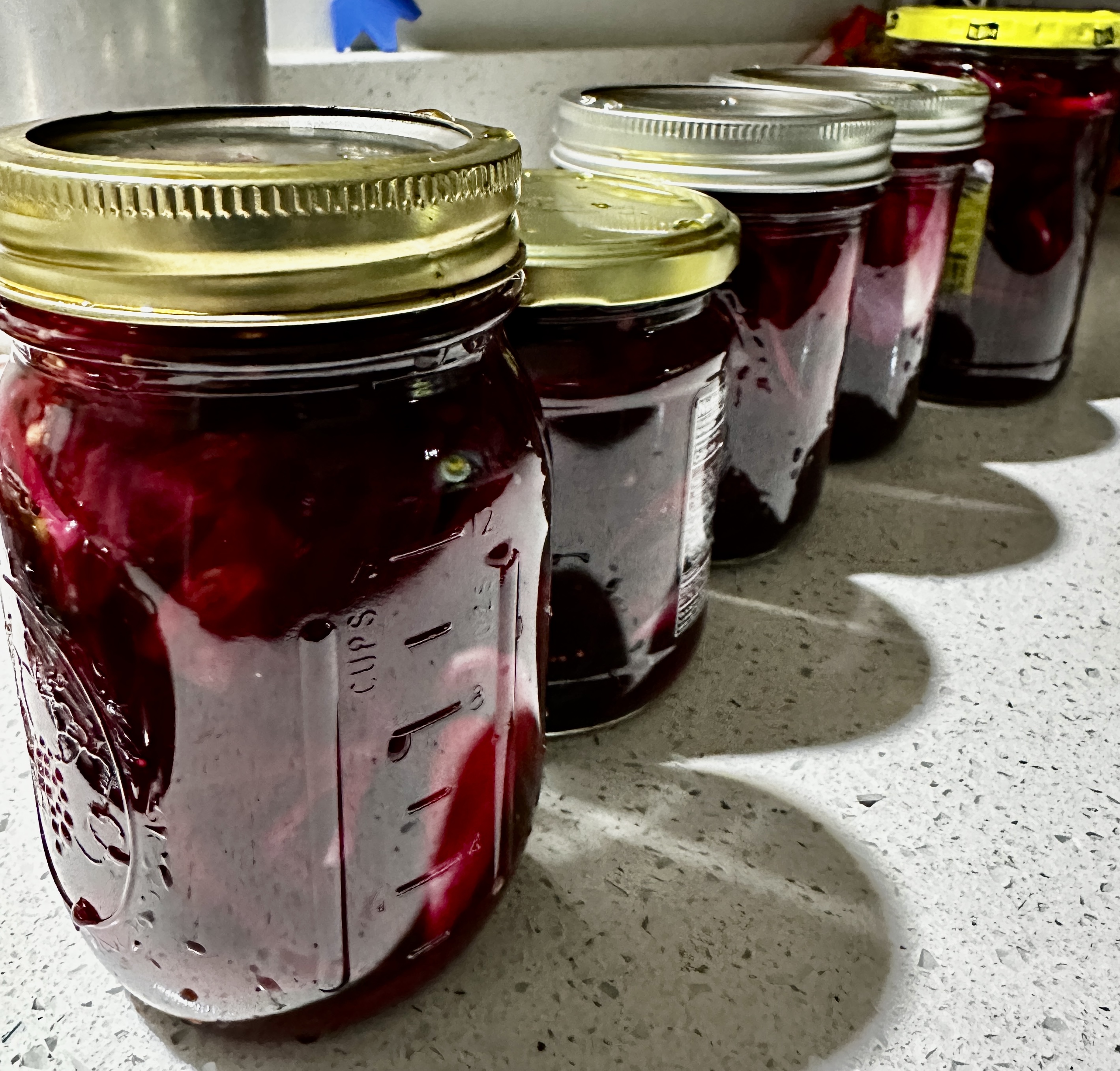
Pickled Cukes, peppers and beets all homegrown
Finding recipes on the net was easy enough. Read through a few, understand the gist of the process, then adapt it to whatever I wanted. The process was as flexible as I was so we suited each other perfectly. I even discovered that I could buy the pickling spices (mustard seeds, peppercorns, caraway seeds, coriander seeds) at an Indian grocery store in large packs and save a fortune over supermarket prices. Pickled carrots were great. Cucumbers were even better with sliced onions, plenty of dill, oregano and basil, depending on which one I had in abundance. A hot chili pepper adds to the flavor. Pickled beets remains my favorite to the extent where off season I buy beets at the market to pickle when my own stock has been finished. The pint jars of pickled veggies make great gifts too!

Last fall I had a huge harvest of roselle, a type of edible hibiscus (also called red sorrel), but needed to look over quite a few youtube videos to learn when, how, and what part of the plant to harvest. Once the flowers have died, the calyx forms over the seed pod. You pull the bright red calyces off, wash them, leave them to dry and I stored them in the freezer until I had enough to work with. Ordinarily people here use roselle to make tea or jam. Something called Florida cranberry sauce, quite the local delicacy during Thanksgiving, is made from roselle calyces instead of cranberries. I loved the taste of the calyces, which to me tasted like sour cherries. I use them to make fruit crumbles, because a crumble is far easier to make than a pie. And the leaves can be eaten fresh too in salads for an added zing! Oh and when a friend visits who requests herbal tea, I use a handful roselle and a few stalks of lemon grass that brews into quite a nice pink/red color with a tangy lemony taste!

What to do with an abundance of eggplant? My eggplant bush was so prolific, I was harvesting one eggplant a week and needed to figure out what to cook with them. My favorite experiment was something called eggplant borani, a dish I had absolutely loved during a job in Kabul, Afghanistan. I have used the same recipe but with pumpkin – depending on what I harvest. It all works well! Afghan food uses a great deal of eggplant, pumpkin, tomatoes, onions, garlic and chilis, some of my favorite foods and fortunately for me, all grown in my backyard. If you’ve never eaten Afghan food, you are missing out! Easier than borani, I regularly make babaganoush from the eggplants, that are roasted, then mashed with garlic and tahini and keeps well in the freezer.
Zucchini is just beginning to come in now. Last year I left them to grow huge! This year I know better. Harvest when they are still young so the skins can be eaten too. The skins get hard with age. Last year I made a lot of stuffed zucchini. This year I’m thinking simpler, more air fryer spears or discs with only olive oil, salt and pepper (and probably some spicier additions and/or Parmesan cheese).
So far this year my garden has taught me to make pumpkin soup, cauliflower soup, broccoli soup, a Caribbean stew from a mixture of pigeon peas, black beans, pole beans, lima beans, and pumpkin (with unsweetened coconut milk); dozens of roselle and mulberry crumbles – sweetened only with a touch of pure maple syrup; mulberry and blackberry ice cream (natural fruit sweetened); eggplant fritters, zucchini fritters, spicy ratatouille, assorted Afghan dishes, lots of sweet potato roasts, and who knows what other new things I will try! It’s all an experiment with guaranteed good results!
If anyone wants recipes, just ask in the comments section. I’ll be happy to share.
 Laine Berman