Going Native
The greatest hurdle to my learning to garden – or to just live – in Florida is learning to recognize and appreciate the unique Florida ecosystem. The native soil/sand (not to mention culture, politics, attitudes) sucks – when compared to everywhere else I have lived. Clearly the hint to successful gardening in Florida is to get over comparing and criticizing these differences and simply accept and embrace all we have here. That includes learning to work with our sand, the environmental fragility, the water issues, the bugs, the flora and fauna. The climate too is officially sub-tropical, but we do have freezes that are brief but they do occur. Then, there is the stifling summer heat that can easily kill off anything, including us gardeners. In short, what’s the point of gardening for a different ecosystem and investing in plants that are not adapted to this local environment? I may love gardening but I sure don’t want to work ridiculously hard fighting mother nature!
Then there is a completely different dilemma. My goal was food forest. Food production requires far more variety of plants and a better soil than I had, hence the massive amounts of fresh mulch I’d raked, shoveled, moved all over the place. Food production required it; native plants didn’t. How was I ever to reconcile the difference? Is it possible to grow native plants as well as food in one area? Could I really keep food production in the backyard while creating a native habitat in the front? Could I even pretend to know what I was doing here and not be embarrassed by revealing all my ignorance on these pages?
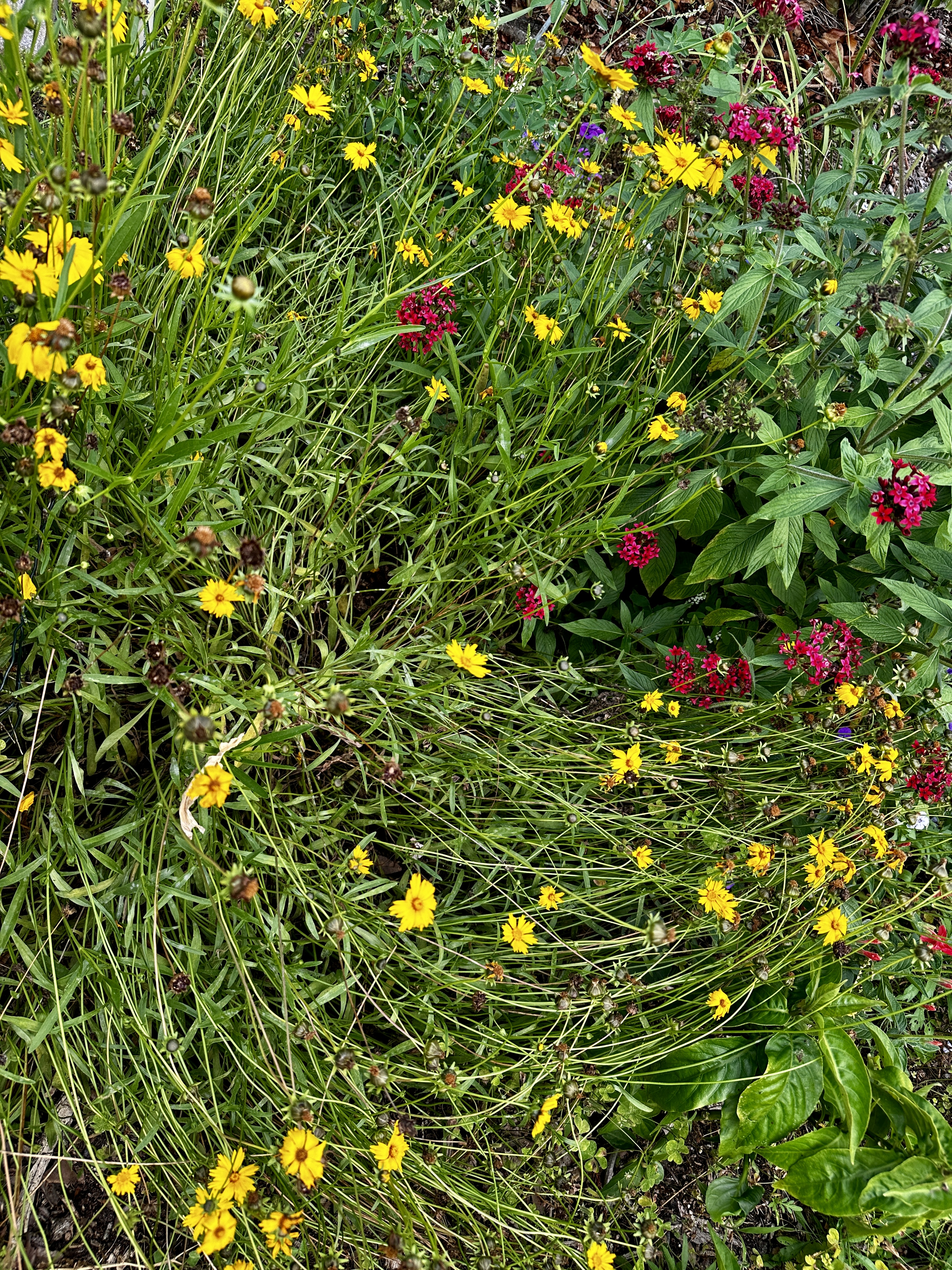
One of the first things I had to learn here was to stop buying plants I knew from life elsewhere. Lavender, tulips, roses, cherry or apple trees from my northern life are sold here but not recommended. Then, mango or soursop, belimbing, coconut or papaya from my Indonesian experience can be grown here – but they take far too much effort to maintain. After the first year’s mistakes and wasted money, have I adapted to here? Of course not! I’m growing food. I still make far too many mistakes. I rarely read seed packet information (usually written for northern climes); I rarely follow planting guides. While I am far more capable of adapting than the plants are, so far there always seems to be things I can do to coax life along – without any of the expensive amendments the nurseries all push. No, I do not use fertilizer – I prune, chop, cut back things and toss the waste onto the ground to decompose there as my only means of revitalizing my soil. There are some plants, like surinam spinach or mexican sunflower, however, that should not be used for chop n drop because they will regrow from anything (the sunflower needs to be cut before it seeds, or flowers, if you use it to chop n drop). Cosmos, coriander, mustard, everglade tomatoes, sweet potatoes, pumpkins, lima beans, passion fruit, and spider wort will grow anywhere, anytime with no effort. They keep my garden looking green and healthy – and visitors thoroughly impressed with my (supposed) green thumb.
A bit harder to learn, but equally necessary is learning to love the bugs too – well, accept them might be more appropriate. My food production depends on them, so STOP flooding out those holes in the sand. Florida native bees do not live in hives like bumblebees. They are solitary and make their nests underground in those little holes I used to stamp over or flood out with the hose before irrigation came into my life. IF there are not hundreds of ants moving in and out of the hole, it’s most likely made by a bee. Be good to them! It is also necessary to learn that (many) caterpillars are welcomed visitors, especially after they have transformed into butterflies.
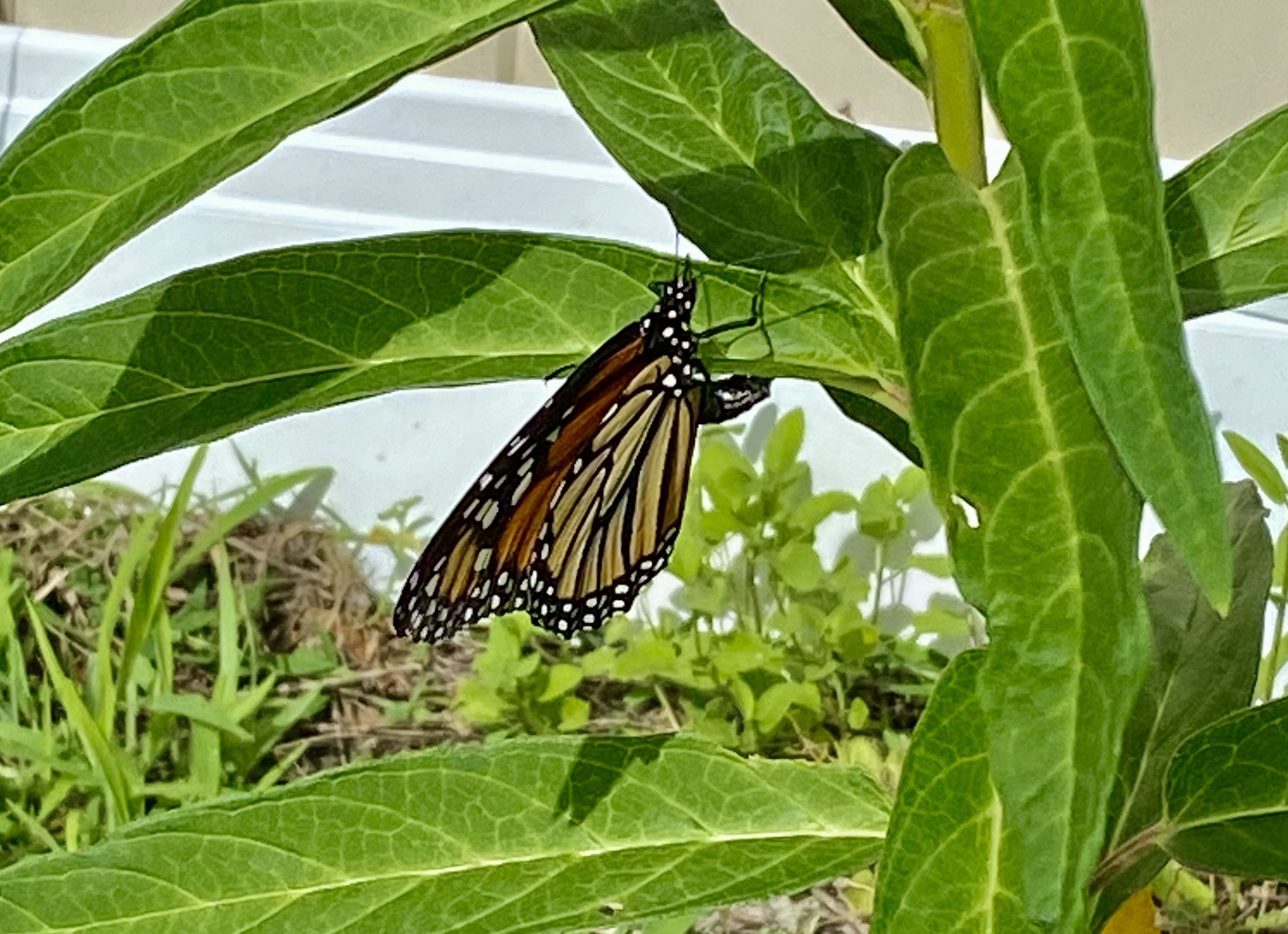
The milkweed plant is where monarch butterflies lay their eggs as their caterpillar diet is limited to its leaves alone. The non-native milkweed, usually found in big garden shops here can have disastrous effects on the butterfly. There is some kind of parasite found only in the non-native varieties that inhibits their wing development. The monarchs munch insatiably on the milkweed leaves until they form their chrysalis, but when they try to emerge, they cannot fly because their wings did not form properly. The non-natives also have a different flowering and dormancy schedule than natives affecting the migratory and breeding biology of the butterflies. In short, plant only native varieties and be knowledgeable enough to know the difference (or join the garden club and depend on their knowledge).
Another thing I find hard to accept with native milkweeds is how prone they are to aphids, those tiny yellow bugs that cover the entire stem. Milkweeds grow quite tall and can be three to four feet high. Imagine walking through your milkweed plot thoroughly pleased by the green, black and white caterpillars devastating the leaves, but noticing the stems covered in those horrid little yellow bugs! Garden Club ladies insist the aphids won’t harm the caterpillars or the plant. Regardless, I would be out early mornings with a bucket of soapy water trying to move the caterpillars to different plants while I sponge off the aphids. Then I’d replace the caterpillars on the now clean plants. That was a ridiculous amount of work for something that never worked. The aphids would be back by the next day.
I never seemed to have luck with milkweeds. As natives, they like the sandy soil we have. With all my mulching for vegetable growing, the top 12 or so inches of my soil was not very sandy. As easy as they are supposed to be to grow, my milkweeds just didn’t thrive. I tried to plant a native swamp milkweed thinking with swamp in the name, a richer soil would work. Still no luck. This was a big dilemma for me because IF my garden would become a Garden Club of Deland certified butterfly garden, I had to have at least five milkweeds. I have one (out of ten planted) in the backyard that keeps returning every spring, with no effort on my part, and two in the front yard that popped up last week in an area I never water or clear. I guess that is evidence of their ease of care, while the ones I try to maintain never live.
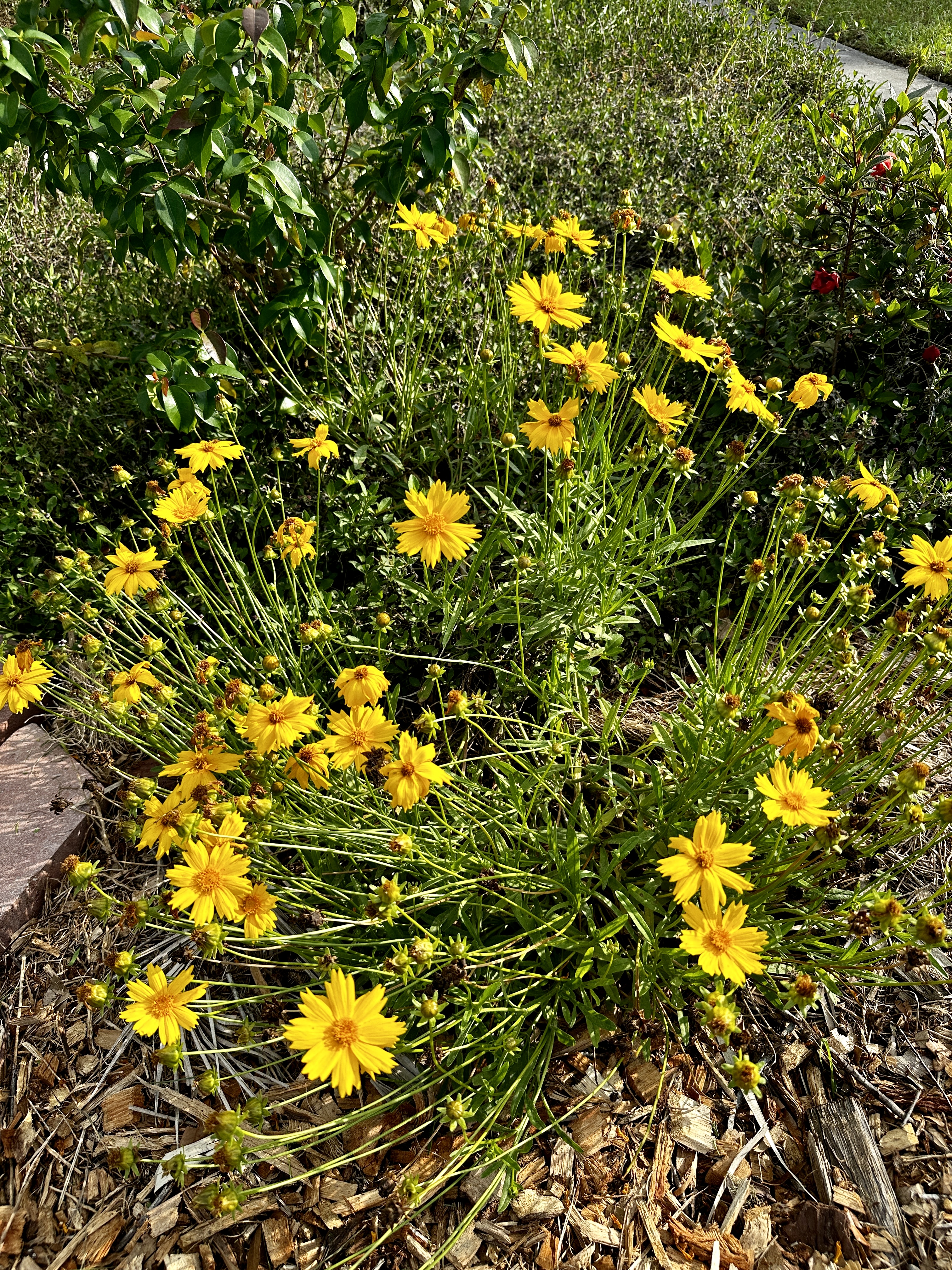
After mulching over most of the front yard, it was time to deal with those not particularly attractive wide expanses, while avoiding an excessive amount of watering. I needed to find native ground cover plants that would require little effort or watering to thrive. Not only did I need to quickly learn all about the native vs non-native plants, I also had to learn about which were termed invasive. The non-native plants are those species introduced (intentionally or accidentally) outside its natural past or present distribution that does not occur naturally in a specified geographic area. An invasive species is a non-native plant introduced by humans that causes (or is likely to cause) environmental harm through reducing native biodiversity or other impacts to our native soils. They displace native species through aggressive growth, and they change ecological functions as they interbreed with native plants.
Not all of the annoying growths in the garden are invasive, however. Cherry laurel, water oak, virginia creeper, Florida betony, oxalis, dollar weeds are all Florida natives that grow much faster and more aggressively than other plants, eventually crowding them out as they take over an area. Unfortunately, they have amazing root systems and reproduce underground through those roots or tubers. Cutting them off at the ground won’t kill them and with all my food production, I would never use herbicides (or pesticides). Then there were camphor trees, torpedo grass, air potatoes, cat’s claw vines, among many others that were non-native, invasive, and spectacularly aggressive. Cutting them out has become a daily, futile activity, similar to washing aphids off the milkweed. Just because something is labeled a Category I Invasive in Florida in no way means it will not be sold in the big box stores. Mexican petunia is one such plant that came with the house when I first bought it and I have seen for sale at garden shops. Since learning about them, I have pulled them all out – along with the mother of millions that I thought was kinda cool at first, but learned to just get rid of them; a futile act at this point. See here for more info: https://fnpsblog.blogspot.com/2010/09/mexican-petunia-plant-gone-rogue.html

The Garden Club members and meetings and all the monthly talks on gardening by our local agricultural extension were my main sources of information, seeds, and cuttings. We all shared what we had and were happy to exchange information and plants. At a Garden Club meeting, I was told by the amazingly knowledgeable Dorothy to take something called frog fruit (also called Fogfruit or Phyla nodiflora) that no one else seemed to want. It was sitting there rather forlornly waiting for someone to take it home and love it. I took the three there and planted them in the front yard mulch bed – and yes, I watered them frequently so they’d take hold. It took quickly and spread with its green low tendrils and small white flowers. It is easily propagated by cutting as it overflowed the bedding where it had developed new roots. It transplanted very easily and now it is expanding nicely over the entire originally mulched front lawn with no effort and no watering. The new side where I have spread the massive truckload of mulch is already showing signs of frog fruit expansion. Today I learned that I should not cut the frogfruit that runs over the edges because they will grow two runners for every one I cut. Instead, I should simply bend them back over to grow away from the boarders.
Other native ground covers I also picked up at a Florida Native Plant Society sale are blue sage and sunshine mimosa. But again, just because they are native, doesn’t mean they are perfect. Sunshine mimosa has incredibly deep taproots once it’s established. We need to be careful not to plant them near water or sewerage pipes as they can cause major damage.
Our local county agricultural extension also holds yearly plant sales. Lines start forming hours before gates open and the feeding frenzy begins as soon as they let us in. Stocks of plants sell out within a few hours. My first year as a gardener, I had bought my native flowering and edible plants at these and at a few other specialized native-only nurseries. Especially with fruit trees, if the cultivar is not specifically bred for our central Florida climate, they will never produce much if any fruit. My second year here I didn’t bother because I truly didn’t need anything new to plant. I think I should have gone and bought stuff anyway.

Purchasing a new tree always requires a great deal of research first, as well as a reputable nursery. Plus, I have no interest in needing to cover up my plants during the next frost. If they can’t take the short cold snaps, it is best they die and I find something more suitable. I still do have four papaya trees and a guava tree that started to regrow once the weather changed. We didn’t have a frost this past winter so I did not need to consider keeping them warm. Since temps seem to be only increasing, I am already concerned about the summer, which here in Florida is already too hot to bear. The avocado, peach, plum, cherry and citrus trees and the blueberry bushes are all local cultivars specifically bred for fewer chill hours and to withstand the freezes. How will they hold up if our summer temperatures exceed 96F?
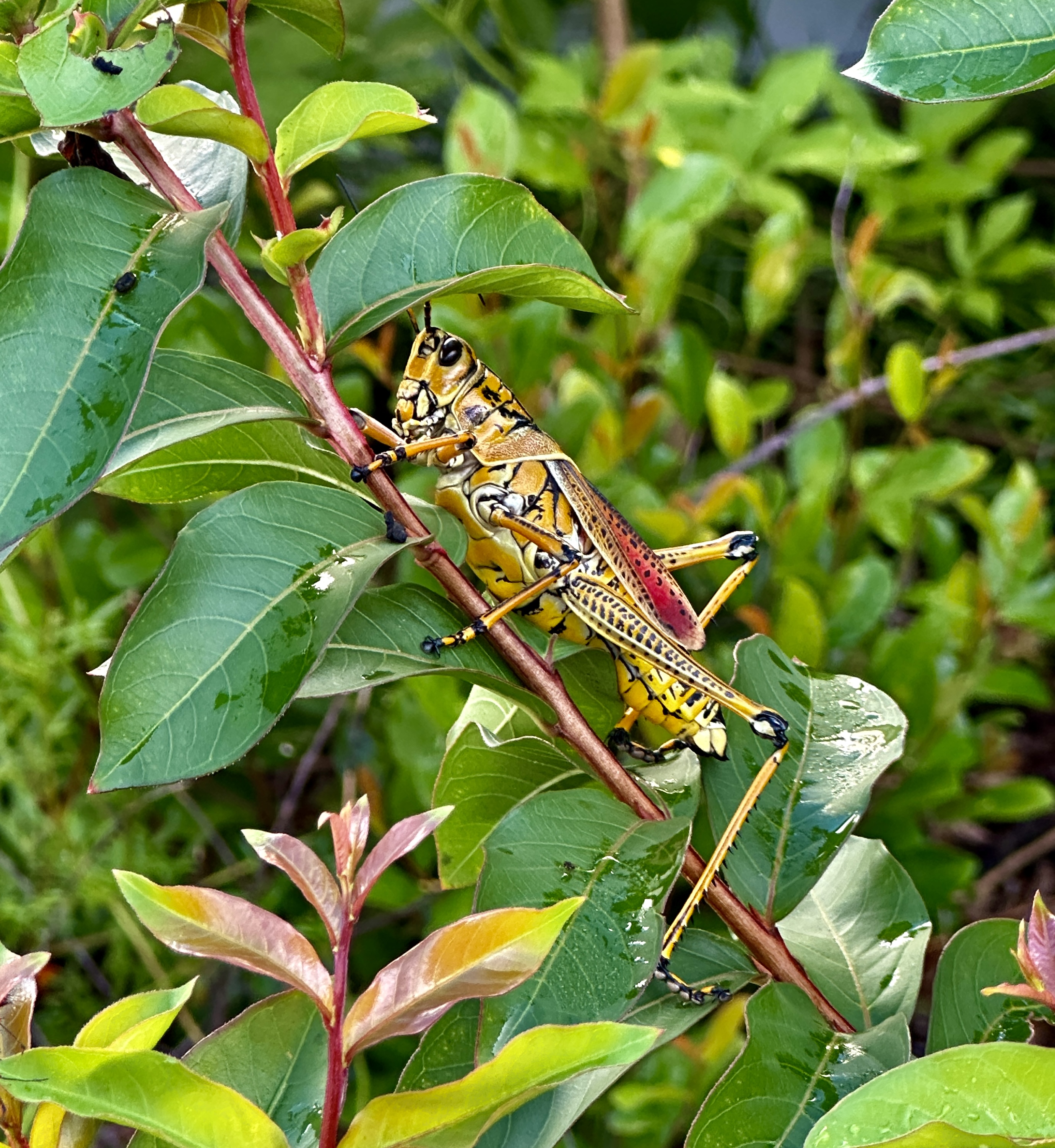
Now that my food production is doing mainly well, I decided to work on native flowers too. What local plants attract what kind of butterfly takes intense research – and a whole new attitude toward caterpillars! I no longer tweeze them off and kill them. Instead, I plant more so they can eat their fill and emerge as butterflies a bit later. Only the lubbers, these massive yellow grasshoppers evoke my genocidal rage. In early spring they emerge from their underground hatcheries and gather in hundreds. They are slow moving so not difficult to grab in gloved hands and squash. They seem to like congregating early mornings on the white vinyl fence making them very easy to squash by the dozens with the flat of my gloved hand. Later in the spring they metamorphosize into giant bright yellow, red and black creatures. Quite beautiful in a bug way but can be disastrous for the garden with their voracious appetites. If they had natural predators, I wouldn’t be so hell-bent on killing them. Nothing eats them as they are highly toxic. Last year, from early spring through the summer, I prowled the garden with BBQ tongs in hand ready to grab and stomp them to death. These handy long tongs are at the ready around the garden, never far from reach when required. But this year, I am reconsidering. Should lubbers fall into the same category as caterpillars? I haven’t decided. I am not sure yet what nature’s plan is for lubbers. Invasive cane toads do need to be destroyed to preserve our native toads. The worms with the flat hammerhead rather than pink pointy round bodies must be destroyed as they eat our local worms. But don’t cut them up as each piece will regrow a new worm. Snakes too are welcome here but need to be recognized quickly as either harmless friend or possibly dangerous. Would I know the difference at a glance between a coral snake and a scarlet snake? Both have red, yellow and black bands. Red next to yellow, kill a fellow. As for invited guests, the bat box Don helped to install has yet to be inhabited.
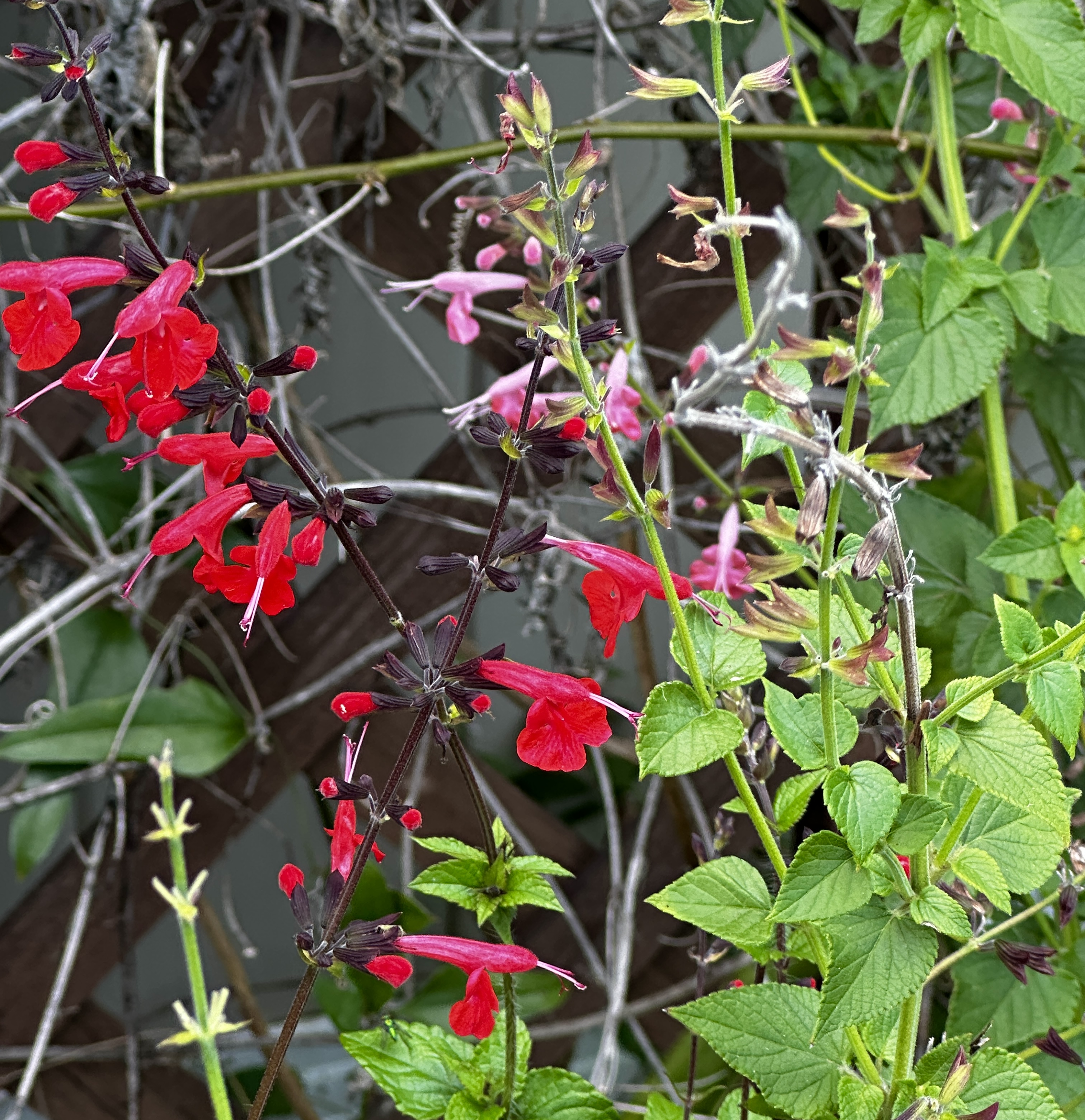
The key to flowers here is easy, effective, pollinator attractive, yet no effort, no fuss, no cost. Having had such extreme good luck with frog fruit, I was sold on natives. I bought a native salvia at the Master Gardener sale and have never looked back. They reproduce with no effort to the point where I actually pull many out before they take over or interfere with my blueberries. I’ve started replanting them in the mulch beds in front and they all seem to bounce back immediately. That’s my kind of gardening! Plus, red salvias attract hummingbirds which are always a thrill to see in the spring. Blue salvias and lyreleaf salvias grow wild when I can’t be bothered to weed wack the remaining sections of grass. It should be noted that salvia are not your typical fabulously classically beautiful plants. They are considered unattractive by some, people who obviously would rather work far harder and pay heaps more for their traditional (northern) flowers.

Through cuttings from other gardeners, I also have (and readily give cuttings to others) firebush, twinflower, coralbean, wood sage, tropical sage, bee balm, gaillardia, coral honeysuckle, sunshine mimosa, white-top aster, passion vine, and others whose name I forgot. Many others just arrived on their own and multiplied – like vinca, coreopsis, betony, oxalis, blue sage, pepperweed, biden’s alba, wood sorrel, phlox, and wild petunia. The more I learn to admire and appreciate them, the more I will learn to love living in Florida!
 Laine Berman