I stumbled out of bed this morning, much like many other 70-year-olds, greeted by a sharp pain in my lower back—back pain and sciatica making yet another unwelcome appearance. Unlike some, I chose not to reach for pain medication or retreat to bed. Instead, I started my day with a hot cup of tea and a simple breakfast of carrots and hummus, all while standing in my kitchen and gently stretching to ease the tightness. After slipping into yesterday’s clothes, discarded on the floor last night, I stepped outside into the cool Florida fall morning, ready for what has become one of my most important rituals.
By 9:30 AM, I was on my bike, pedaling—not coasting on an E-bike—through 20 miles in just under two hours. Riding at a relaxed and steady pace of 10 to 10.5 mph, I wasn’t racing or rushing. These rides are moments for me to savor solitude and reflect, letting my thoughts wander freely. Despite the initial discomfort, cycling doesn’t aggravate my back; rather, the movement and rhythm serve as the best remedy I’ve found for my sore muscles.
The Power of Narrative on Two Wheels
Alone with my thoughts on my bike, I construct stories, make plans, and solve problems. Cycling becomes a space where I can process whatever life throws at me—including pain. Joan Didion famously wrote, “We tell ourselves stories in order to live,” highlighting our need for narrative to bring order and meaning to the chaos of existence. Storytelling shapes our identities, justifies our actions, and gives purpose to our experiences. For me, these stories flow most naturally while I’m cycling, my mind free to wander as my body moves. For me then, I bike in order to live.
Cycling Through Grief and Change
When I lost the man I loved suddenly in Florida in May 2021, I sought solace on my bike. The rhythm of my heart, the steadiness of my breath, and the strength in my legs became a physical counterpoint to my emotional turmoil. I would tackle hills to intensify the challenge, hoping the exertion would drown out my grief. Observing my muscles straining and burning, I found appreciation in the resilience and beauty of the human body. If only my mind could move so smoothly! During these early rides, I would pause to jot down thoughts on my phone, later transforming them into poetry and essays dedicated to my lover and the journey of mourning. I texted these poems to his phone imagining him reading them in whatever part of the unknown world he now inhabited. At home, the grief felt overwhelming, but on my bike, I found release and inspiration to write about my life and loss.
A Lifeline in Difficult Times
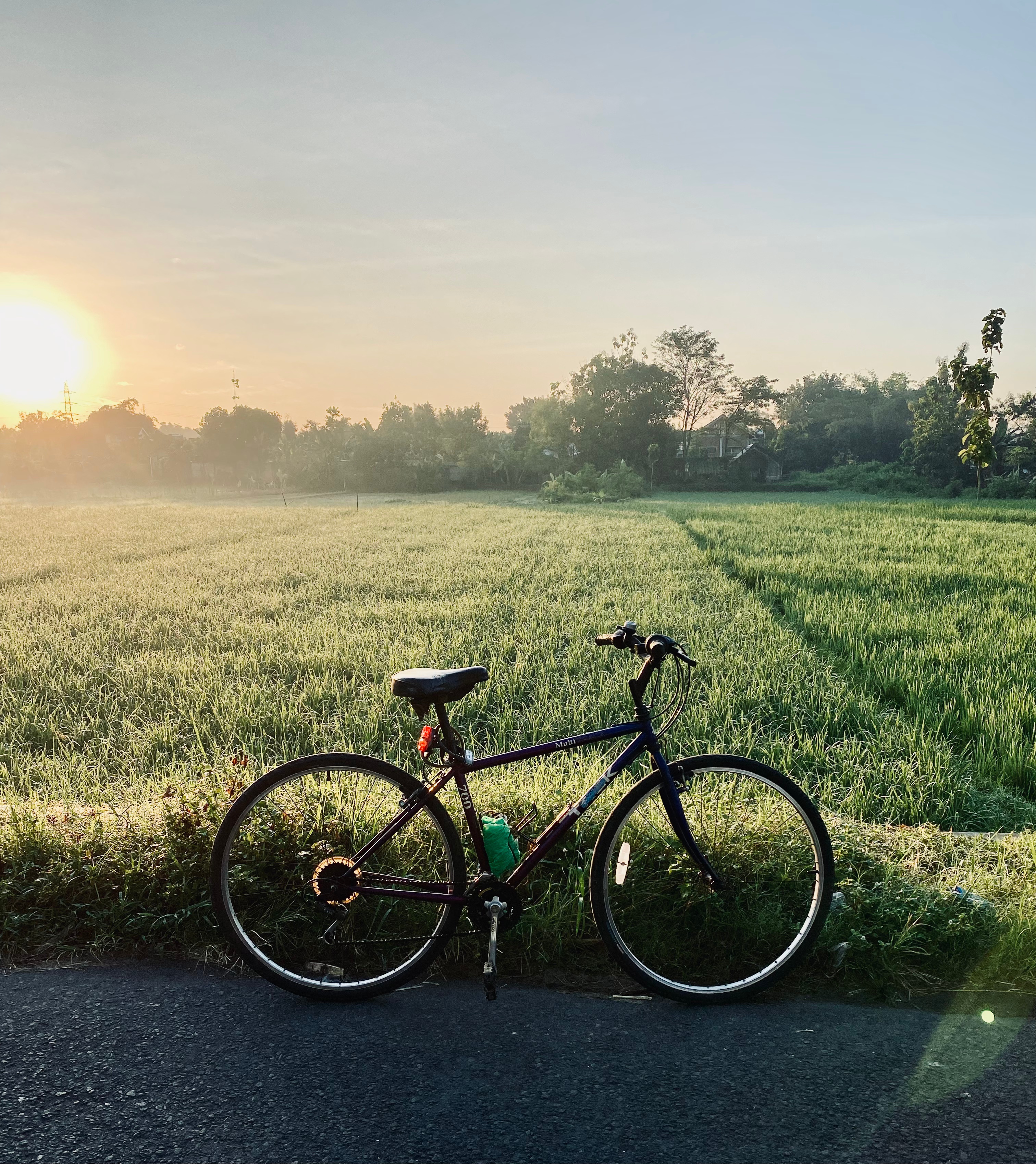
Cycling has become my way of navigating most of life’s challenges. I began biking in earnest in March 2020 during the COVID-19 pandemic, when my town in Southeast Asia was under strict lockdown. I’d rise long before the sun and ride for hours, before the lockdown police were out. Living near the equator meant the heat soon became unbearable, but those rides in the dark offered precious time to think and cope. In July 2021, the loss of over 20 friends to COVID—and the recent passing of my lover—drove me to venture farther than ever into the hills. That ride was pivotal; I made the monumental decision to return to the USA after nearly 40 years living abroad. I moved back to DeLand just weeks later, a place where my lover now only existed in the stories those who knew him would tell. It was a decision I’m grateful for.
Tribute to Cycling
This morning, as I rode, I began to shape this tribute to cycling—a practice that has quite literally saved me. Cycling has helped me think, compose, and restructure my personal narrative to better cope with life’s upheavals. If you’re not a cyclist, I hope you’ve found your own means of managing your thoughts and caring for your body. As for me, riding alone with my thoughts will always be my way of finding home, both metaphorically and literally.
DeLand, 21 Nov 2025
 Laine Berman